GF-PLA: check before adopting
Test prints / GF-PLA: check before adopting
Nozzle first, then flow by weight, Z strength, fits and heat, for Polymaker HT-PLA-GF and Siraya Tech Fibreheart ABS-GF on the ObXiDian 0.4 standard-flow nozzle.
Toolpaths
Every extrusion move in the G-code, layer by layer. Drag the layer slider, scrub through the top layer, or play the print.
Toolpaths load when you open this view.
Read from the G-code that the printer gets. The clock adds each move at its programmed speed, without acceleration or travel, so it is shorter than the slicer's estimate.
Settings
On top of the stack that the print jobs load. The printer tuning page shows that stack.
| Printer | File | Changes |
|---|---|---|
| Prusa Core One+ | HTPLAGF: Polymaker HT-PLA-GF, weigh cubegfpla-checks htplagf (core-one-plus).bgcode | |
| Prusa Core One+ | HTPLAGF-CREEP: Polymaker HT-PLA-GF, creep coupongfpla-checks htplagf-creep (core-one-plus).bgcode | |
| Prusa Core One+ | ABSGF: Siraya Tech Fibreheart ABS-GF, weigh cubegfpla-checks absgf (core-one-plus).bgcode | |
| Prusa Core One+ | ABSGF-CREEP: Siraya Tech Fibreheart ABS-GF, creep coupongfpla-checks absgf-creep (core-one-plus).bgcode |
Procedure
What it is for. It checks Ryan’s two glass-filled filaments before we use them for parts: Polymaker HT-PLA-GF and Siraya Tech Fibreheart ABS-GF. Each gets the PETG tests, so the results compare directly.
Print. Nozzle: an E3D ObXiDian 0.4 standard-flow nozzle on the Core One+ (Ryan, 2026-10-06). It is hardened, so glass fibre does not wear it as it wears brass. Fit it in place of the HF0.4 for these prints, and set the printer’s nozzle to 0.4 standard flow, hardened: the GF files check for it, and the PLA and PETG files check for the HF0.4. Select the standard-flow stack: slice_all gives the two GF filaments the Core One 0.4 printer and its 0.20 mm BALANCED print preset, not the HF0.4 ones. Dry each spool before you print it: the ABS-GF at 65 °C for 4 to 6 hours (Siraya Tech).
Polymaker HT-PLA-GF: 210 to 230 °C, bed 25 to 60 °C, fan on, no enclosure (Polymaker’s data sheet). It prints with generic PLA settings. Annealed at 80 to 100 °C for 30 minutes it takes more heat (Polymaker): load one creep coupon as printed and one annealed, so the result shows what annealing gives.
Siraya Tech Fibreheart ABS-GF: 250 to 270 °C, bed 100 to 110 °C, fan 0 to 30 %, 30 to 120 mm/s (Siraya Tech’s user guide). Keep the enclosure closed and let the chamber come up to about 50 °C before you start; it warps in open air. Use PEI or glass with glue stick.
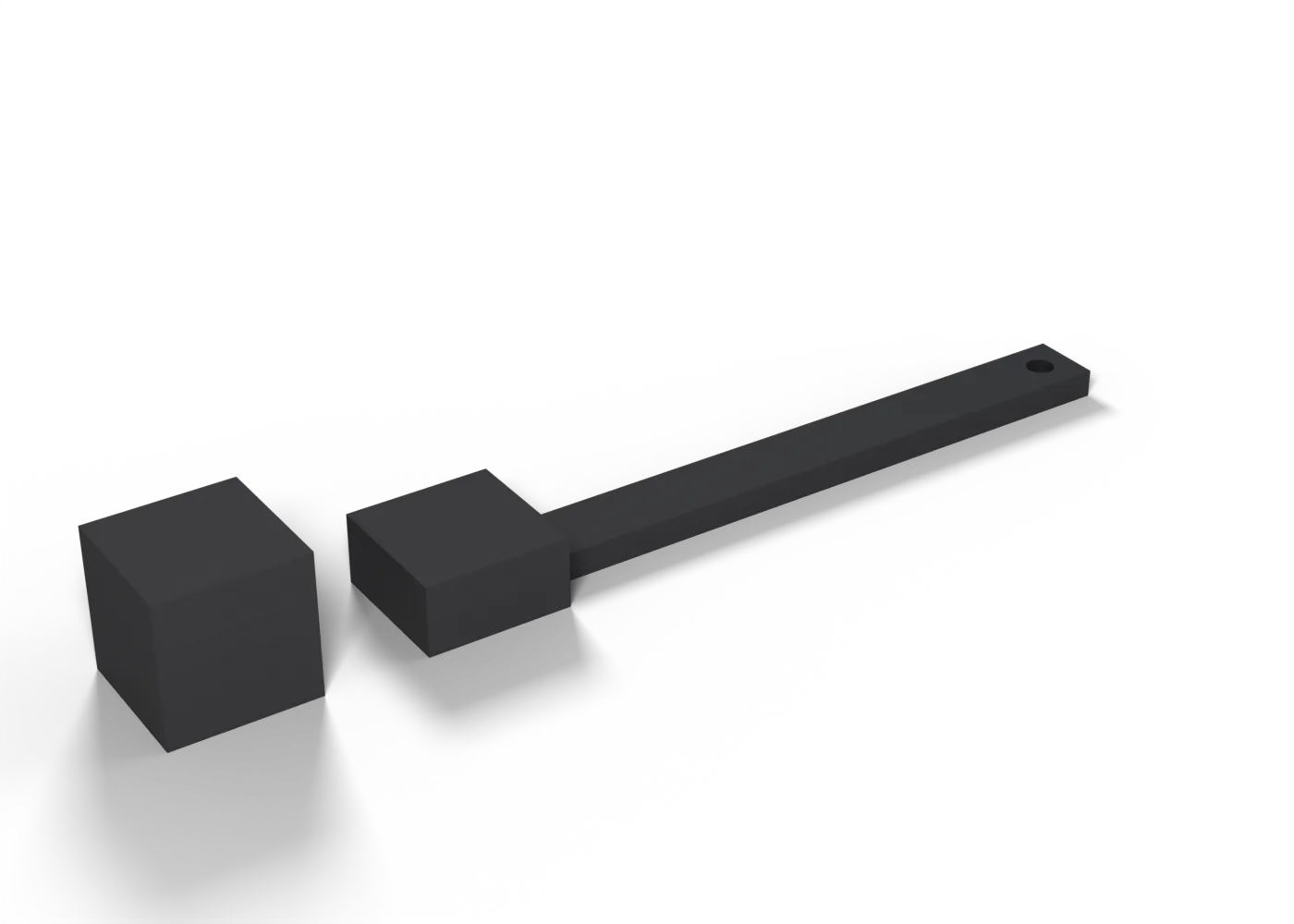
Measure. For each: weigh the 20 mm cube against its sliced mass (the matte surface hides over-extrusion), and load the creep coupon at 60 °C. Only these two are sliced for GF. The break coupons, the fit gauge and the dowel coupon (GF prints shrink less than PETG) need GF files too: ask th-main for them. Do not print the PETG files in GF.
Pass. No pass mark yet: compare each result with PETG’s. Keep GF parts off the pusher mount and anything near the ESCs or motors, whatever the result.
Record. For each filament: the cube’s mass, the break masses, the fits, the dowel fit and the droop.
In the tuning log
- Nozzle and GF-PLAVendor value
Comments
Comment on the whole page here, or on one section or step with the button beside it.