Position-light driver
Boards / three AL8862 channels for the wing tips and the tail
The position-light driver: three constant-current channels for the red, green and white position lights, controlled and monitored by the lights node.
- Revision
- A draft
- Sheets
- 1
- Parts
- 31
- Location
- aircraft
- Bus
- none: a GH-10 lead from the lights node
- Status
- Rev A draft: schematic only
What it does
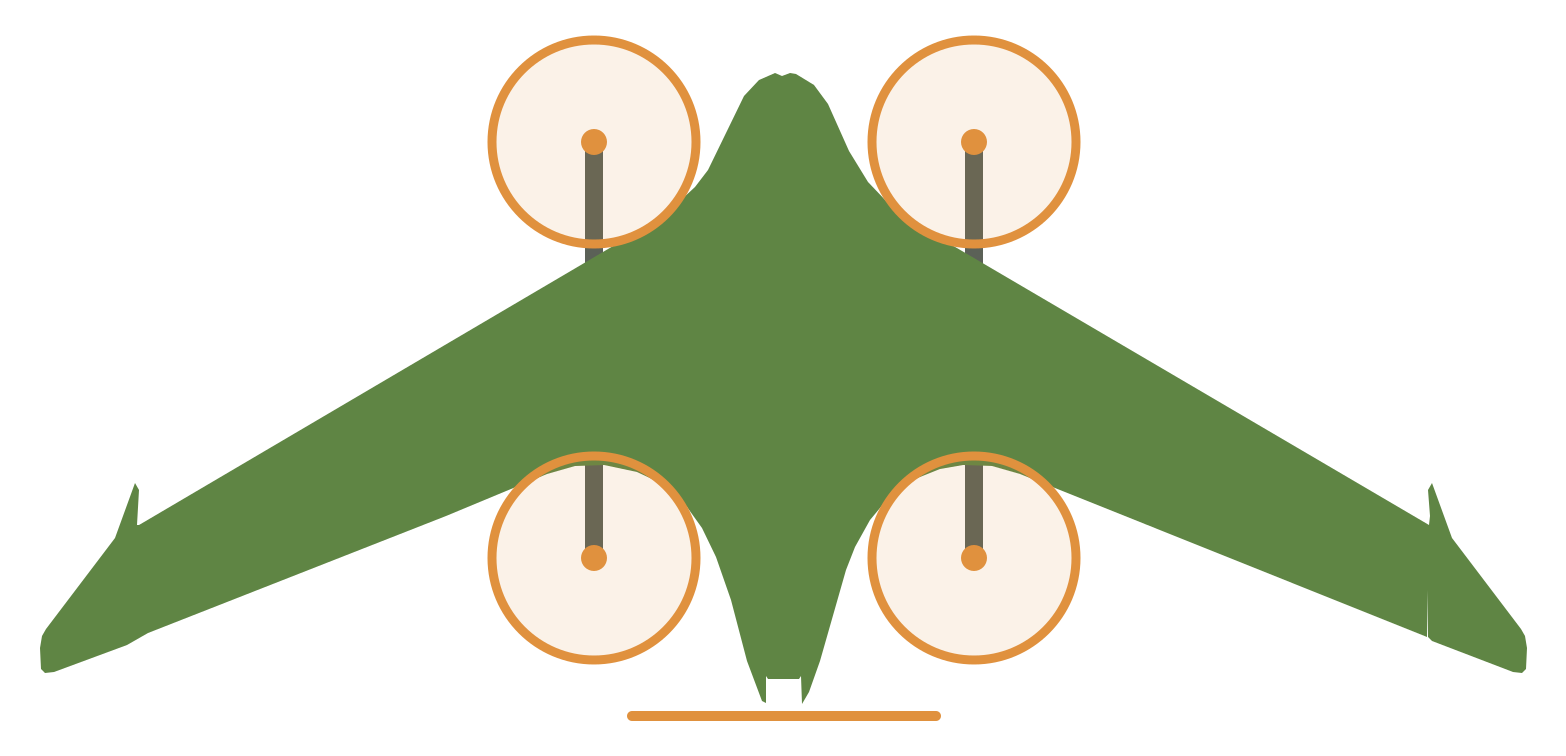
It drives the three position lights at 333 mA each: red at the port wing tip, green at the starboard tip and white under the tail. Each channel is an AL8862 buck. A common-mode choke sits on each lead, because the tip leads are about a metre long and cross the keel roots where the LoRa and ELRS coax comes down. Each channel also has a current-sense amplifier whose output goes back to the node, so the node can tell an open LED from a working one. The node dims the lights and holds their control lines on while its MCU restarts.
The circuit is the lights node’s three position channels as they were, moved to their own board on 2026-10-11 so the node fits its seat.
Where it sits
One board for all three lights, where the two wing-tip leads and the tail lead meet. The candidate seat is flat in the Bay’s aft cavity, 118 mm from the compass keep-out, with leads of about a metre to each tip and 90 mm to the tail (th-blender). The same cavity is a candidate for the pusher ESC, so the seat is still open. The board is about 35 x 25 x 7 mm (estimate).
Main parts
| Part | Function |
|---|---|
| 3 x AL8862 | Buck drivers, 333 mA |
| 3 x TDK ACM2520-301 | Common-mode choke on each lead |
| 3 x INA180A1 | Current sense, returned to the node for the open-LED check |
Connections
| Connector | Type | To |
|---|---|---|
| J1 | GH-10 | Lights node J7: switched 2S, 3.3 V, the three dimming lines, the three current-sense returns |
| J2 | GH-6 | Red, green and white LED pairs (28 AWG) to the position-light tabs |
Status
Rev A draft, schematic only, 31 parts (2026-10-11), ERC clean. No layout yet.
Schematic and layout
Files
From the EDA repository at revision b201257 (2026-10-12). Open the files in KiCad 10 or later.
Comments
Comment on the whole page here, or on one section or step with the button beside it.