LW-PLA overhang and bridge
Test prints / LW-PLA: the foam is the calibration
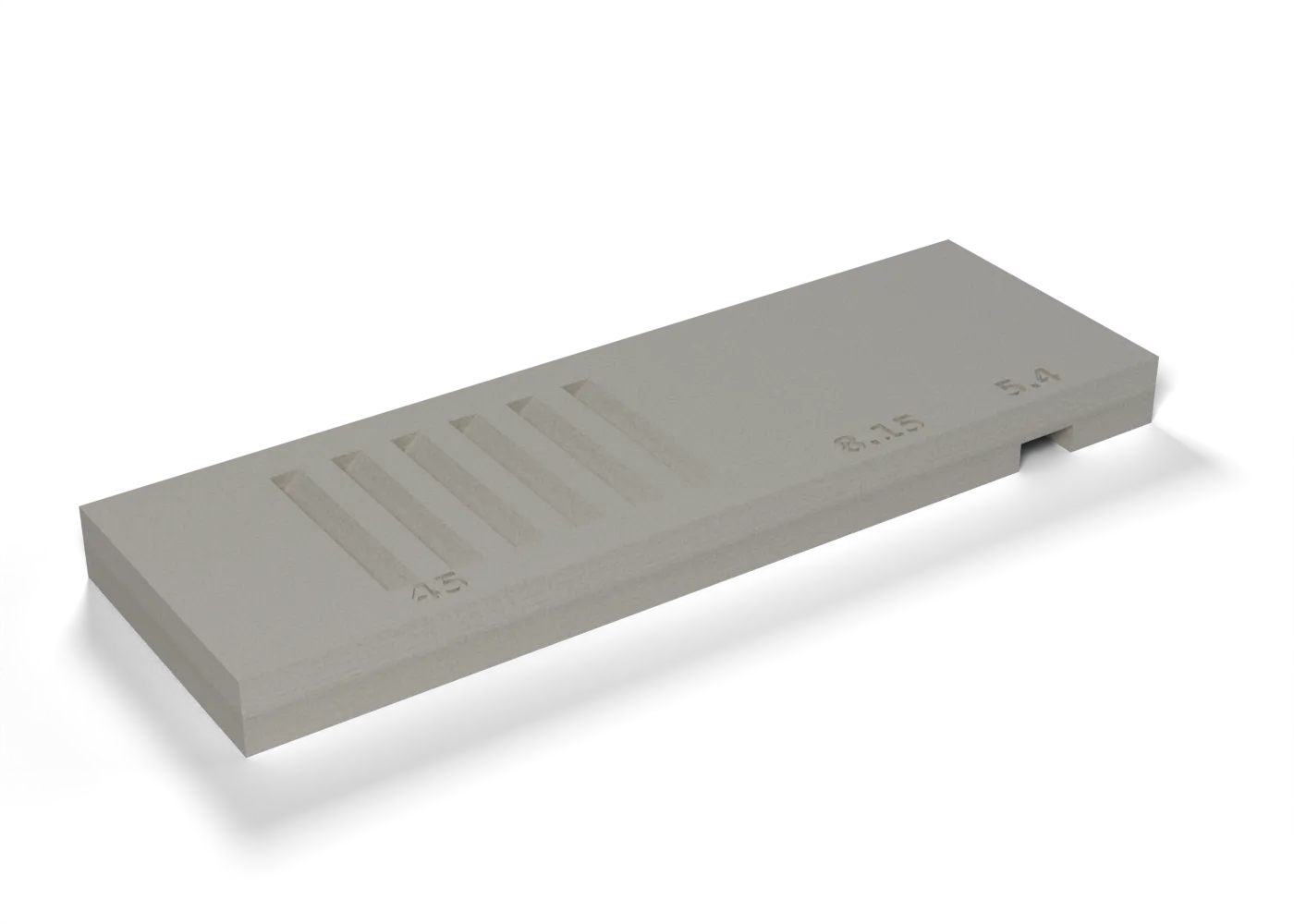
The 45° louvre slots, the 8.15 mm pocket ceiling and the 5.4 mm bridge, at 100 % fan and at 30 %.
Toolpaths
Every extrusion move in the G-code, layer by layer. Drag the layer slider, scrub through the top layer, or play the print.
Toolpaths load when you open this view.
Read from the G-code that the printer gets. The clock adds each move at its programmed speed, without acceleration or travel, so it is shorter than the slicer's estimate.
Settings
On top of the stack that the print jobs load. The printer tuning page shows that stack.
| Printer | File | Changes |
|---|---|---|
| Prusa Core One+ | A: 100 % fan everywherelw-overhang a (core-one-plus).bgcode | bridge_fan_speed 100overhang_fan_speed_0 100overhang_fan_speed_1 100overhang_fan_speed_2 100overhang_fan_speed_3 100enable_dynamic_fan_speeds 0min_fan_speed 100max_fan_speed 100 |
| Prusa Core One+ | B: 30 % fan everywherelw-overhang b (core-one-plus).bgcode | bridge_fan_speed 30overhang_fan_speed_0 30overhang_fan_speed_1 30overhang_fan_speed_2 30overhang_fan_speed_3 30enable_dynamic_fan_speeds 0min_fan_speed 30max_fan_speed 30 |
Procedure
What it is for. The Fuselage Front has three features with no support: 45° louvre slots, a magnet pocket with a bridged ceiling and a groove with a bridged roof. This test picks the fan speed for them.
Print. Print A and B. A holds 100 % fan everywhere, and B holds 30 % everywhere. Today the LW-PLA profile sets 30 % fan, but bridges and overhangs inherit 100 % from Generic PLA.
Measure. Compare the louvre slots’ undersides, the pocket ceiling and the groove roof for sag, and break a slat from each to compare strength.
Pass. No pass mark. Full fan holds the shape, but it can stop the foam from filling the bead. th-main sets the profile from the result.
Record. For A and B: the sag at each feature, and which slat broke more easily.
In the tuning log
Comments
Comment on the whole page here, or on one section or step with the button beside it.